
A Field Guide to Fabric: How to Tell Quality at a Glance (and a Touch)
There is a moment that every woman who cares about clothes eventually experiences. You are standing in a shop, or scrolling through a website, and something catches your eye — the colour, the cut, the way it falls on the hanger. You reach out and touch it, or you read the label, and something shifts. The illusion dissolves. The fabric is wrong: too thin, too synthetic, too plasticky against the fingers, too obviously made to look like something it is not.
The ability to identify fabric quality is one of the most useful skills a well-dressed woman can develop. It is not a rarefied or technical knowledge. It does not require years of training. It requires only attention — a willingness to slow down, handle things carefully, and learn to trust what your hands and eyes are telling you.
This guide covers the fabrics that matter most in a timeless wardrobe: what they look like, what they feel like, how they behave, what distinguishes a good version from a poor one, and how to care for them once you have found the real thing.
Why Fabric Is the Foundation
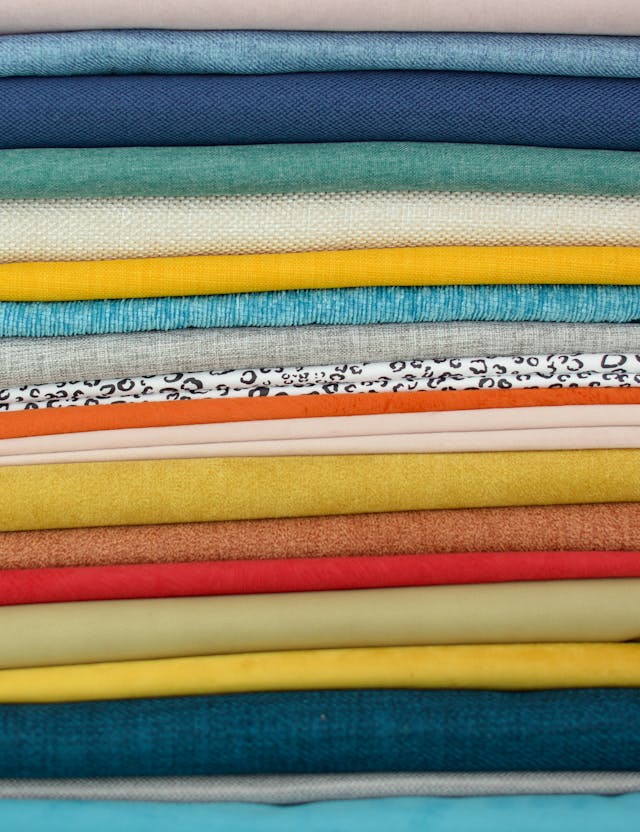
Before the specifics: why does fabric matter so much more than most of us are taught?
The fashion industry — particularly at the fast-fashion end — has become extraordinarily skilled at producing garments that photograph well and look acceptable on a hanger. The camera flattens texture and compresses depth; what reads as luxurious on a screen can feel entirely different in the hand. This gap between appearance and reality is where most wardrobe mistakes are made.
A poorly made garment in a beautiful fabric will still look good and wear well. A beautifully made garment in a poor fabric will not. Fabric is the foundation on which everything else — construction, fit, longevity — depends. It determines how a piece drapes, how it moves with the body, how it holds its shape through a day and a decade, and whether it develops character or simply deteriorates.
Understanding fabric is also, practically speaking, an act of financial intelligence. A well-chosen wool coat at a higher price point will outlast three cheaper versions; a silk blouse cared for correctly will look better in ten years than a polyester imitation did in ten days. The economics of quality are not complicated once you understand what quality actually is.
Wool
Wool is one of the oldest and most extraordinary fibres in human history. It regulates temperature in both directions — warming in cold and cooling in heat — resists moisture, resists wrinkles, and holds its shape with a resilience that no synthetic fibre has yet matched. A good wool garment, properly cared for, will outlast almost anything else in the wardrobe.
How to Identify Quality Wool
By touch: Fine wool should feel soft against the skin, not scratchy. The finest grades — merino, cashmere, vicuña — have fibres so fine that they register as almost silky. Coarser wools (used in overcoats and structured suiting) will feel denser and more textured, which is appropriate for their purpose, but should still feel substantial rather than rough.
By weight and drape: Hold the fabric up and let it fall. Quality wool has a natural drape — it moves with gravity rather than resisting it. A heavy boiled wool will be dense and structured; a fine wool crepe will fall in smooth, continuous folds. Both are correct for their purpose. What you are looking for is evenness: no bunching, no irregular weight distribution, no places where the weave looks thin or loose.
By the label: Look for a wool percentage of at least 80–100%. Blends with a small percentage of nylon or elastane can be appropriate in tailoring (they add durability and stretch retention), but avoid anything where wool is a minority fabric in a blend of synthetics.
By the weave: Hold the fabric to the light. A quality weave will be even and tight, with no thin spots or loose threads. In a tweed or textured wool, the colours should be woven in, not printed on.
The Grades of Wool
Not all wool is the same. Merino — from merino sheep — is the gold standard for next-to-skin softness. Lambswool, sheared from young sheep, is similarly fine. Shetland is coarser but extraordinarily durable, appropriate for outerwear. Cashmere (technically a different fibre, from the cashmere goat) is the finest and most coveted of all, prized for its extraordinary softness and lightness. At the very peak sits vicuña, the rarest and most expensive natural fibre in the world, woven from the fleece of a wild Andean camelid.
For practical wardrobe purposes: merino for fine knits and base layers, a mid-weight wool crepe or gabardine for suiting and skirts, and a heavy wool or cashmere blend for coats.
Caring for Wool
Hand-wash fine wools in cool water with a gentle detergent, or use the delicate cycle in a mesh bag. Never wring or twist wool when wet; it will distort the fibres. Dry flat. Store folded, not hung — hanging stretches woolens over time. Cedar blocks or lavender sachets will deter moths without the chemical damage of mothballs.
Silk
Silk is produced by silkworms — specifically, by the cocoon of the Bombyx mori moth — and has been prized for thousands of years for properties that no synthetic has ever convincingly replicated. It is extraordinarily strong for its weight. It regulates temperature. It takes dye in a way that produces colours of unusual depth and luminosity. And it has a quality of light — a soft, shifting luminescence that catches and moves with the body — that is entirely its own.
How to Identify Quality Silk
By touch: Real silk feels cool and smooth against the skin. It warms quickly to body temperature. Run the fabric between your fingers: it should glide without catching. Be aware that this test has a famous shortcut — real silk, when rubbed between the palms, warms up from friction; polyester does not.
By the drape: Quality silk drapes with a fluidity that is immediately distinguishable from synthetic alternatives. Hold it up and release it — it should fall in continuous, unbroken folds. Polyester satin is stiffer and has a slightly plastic quality to its movement.
By the sheen: Real silk has a soft, lustrous sheen that shifts as it moves — sometimes appearing matt, sometimes luminous, depending on the angle of the light. Polyester satin has a flatter, more uniform gloss that does not change. This is the difference between iridescence and mere shininess.
By the label: Momme (mm) is the unit of silk weight. Heavier momme indicates a denser, more durable weave. For blouses and linings, 12–16mm is appropriate; for heavier garments, 18–30mm. Below 12mm, the fabric will be sheer and fragile.
Types of Silk Worth Knowing
Charmeuse: The classic silk for blouses and lingerie — soft, drapey, with a subtle sheen on one side and a matte finish on the other. Crepe de chine: Slightly textured, with a matte surface and excellent drape. Silk organza: Sheer and crisp, used in evening wear and overlays. Dupioni: Crisp and textured with a distinctive slubbed surface, appropriate for structured dresses and jackets. Silk satin: The most formal and lustrous, with a brilliant surface and rich drape.
Caring for Silk
The reputation of silk as difficult to care for is somewhat overstated. Hand-washing in cool water with a gentle, pH-neutral detergent is safe for most silk garments and preferable to dry-cleaning, which can dull the fibre over time. Never wring; press between two clean towels to remove water. Iron on the wrong side while still slightly damp, on a low heat. Keep silk out of direct sunlight, which yellows the fibre.
Linen
Linen is made from the flax plant and is one of the oldest textiles on earth — fragments of woven linen have been found in Egyptian tombs dating back six thousand years. It is prized for its extraordinary breathability, its cool, slightly textured hand, and the way it ages: unlike most fabrics, linen actually improves with washing and time, becoming softer and more supple while retaining its structure.
How to Identify Quality Linen
By touch: Quality linen feels cool, smooth, and slightly textured — not rough or scratchy. It should have a natural, slightly irregular surface that is characteristic of the plant fibre, but this texture should be subtle and pleasant rather than abrasive.
By the weight: Hold it up to light. Good linen will have a relatively even weave, though small irregularities are natural and desirable — they are evidence of the natural fibre and not a defect. A very uniform, glassy surface often indicates that synthetic fibres have been added.
By the crease test: Linen wrinkles, and good linen wrinkles well — meaning the crease is clean and falls in natural folds rather than bunching unevenly. The wrinkling of linen is part of its character, not a flaw. If a piece of linen does not crease at all, it has likely been treated with a crease-resistant chemical finish, which compromises the breathability that makes linen valuable.
By the label: Pure linen (100% flax) is ideal. A linen-cotton blend can work beautifully, producing a fabric that is slightly softer and less prone to wrinkling while retaining most of linen’s qualities. Avoid linen-polyester blends, which lose the breathability entirely.
Caring for Linen
Linen can be machine-washed on a gentle cycle in cool or warm water. It improves with washing — new linen is often slightly stiff, but it softens considerably after several washes. Do not over-dry in a machine; remove while still slightly damp and hang or lay flat to finish drying. Iron while damp for a crisp finish, or leave unironed for a relaxed one — both are correct, depending on the garment and the occasion.
Cotton
Cotton is so ubiquitous that it is easy to overlook it as an ordinary fabric. It is not. Good cotton — tightly woven, properly finished, cut and sewn with care — is one of the most elegant and enduring fabrics available. The white poplin shirt, the crisp Oxford cloth blouse, the fine cotton lawn dress: these are not compromises. They are classics.
How to Identify Quality Cotton
By the thread count and weave: A tighter weave produces a more durable, crisper fabric. Poplin, with its fine, tight weave, is one of the best for shirts and blouses. Oxford cloth is slightly looser and more textured, with a characteristic basket weave. Voile and lawn are very fine and sheer, appropriate for warm weather. Denim is a sturdy twill weave — quality denim should feel substantial, even stiff, when new.
By the hand: Quality cotton feels smooth and somewhat cool to the touch. It should not feel flimsy, see-through, or vaguely plasticky. If a white cotton shirt is transparent in normal light, the fabric is too thin to perform well or hold its shape.
By the label: Long-staple cottons — Egyptian cotton and Pima cotton — are the highest grades, with longer fibres that produce a stronger, softer, more lustrous fabric. These are worth seeking out for anything worn close to the skin.
By the finish: Run your fingers firmly across the surface. Quality cotton should feel even and consistent. Pull the weave slightly and release: it should spring back without distortion.
Caring for Cotton
Cotton is the most forgiving fabric to care for. Machine wash in cool to warm water; hot water will shrink and fade. Tumble dry on a medium heat, or line-dry for a crisper result. Iron on a medium-to-high heat while slightly damp. White cotton benefits from occasional washing at a higher temperature to maintain brightness, and can be dried in sunlight, which acts as a natural whitener.
What to Look for Beyond the Fabric
Fabric is the foundation, but it is not the whole story. When assessing a garment’s quality, look also at:
Seams: Turn the garment inside out. Seams should be even, lie flat, and be finished cleanly — with either a French seam, a bound edge, or a neat overlock. Unfinished or fraying seam allowances are a sign of poor construction.
Stitching: The stitches should be small, even, and tight. Count the stitches per inch if you can: a higher stitch count generally indicates stronger, more careful construction. Loose or uneven stitching will fail first under stress.
Lining: A quality lined garment will have a lining that moves independently of the outer fabric rather than pulling against it. The lining should be cut on the same grain as the outer fabric and sewn with enough ease that it does not drag.
Buttons and fastenings: Buttons should be sewn with a shank — a small thread loop that holds them away from the fabric and prevents strain. Mother-of-pearl, horn, and corozo (a natural nut material) buttons all indicate a garment made with care. Lightweight plastic buttons suggest the opposite. Zips should glide without catching; a metal zip, properly installed, will outlast the garment.
Pattern matching: On any garment with a stripe, check, or visible pattern: does the pattern match at the seams? On a well-made garment, it will. On a poorly made one, the pattern will run discontinuously across each seam, which is both a sign of carelessness and a source of visual restlessness that undermines the whole effect.
Learning to Trust Your Hands
The knowledge in this guide is not acquired all at once. It accumulates through handling — through touching many fabrics in many shops, washing and wearing and observing how things age, and developing a quiet attentiveness to the physical reality of what you wear.
The most useful thing you can do is slow down. In an era of instant purchasing, the act of handling something carefully — feeling its weight, its texture, its drape — is almost countercultural. But it is also the most reliable form of quality assessment available, more honest than any marketing copy and more accurate than any label.
Trust the fabric that feels like it belongs to the natural world: cool, living, varied, complex. Trust the garment that reveals more quality the closer you look, rather than less. And invest in the pieces that reward that attention — because they are the ones that will reward you, quietly and reliably, for years to come.