
What Audrey, Jackie, and Carolyn Got Right: Three Approaches to Quiet Elegance
There are women whose style outlives them. Not because they were famous — fame alone has never made anyone elegant — but because they understood something about dressing that most of us spend years trying to articulate. They wore clothes in a way that looked effortless without being careless, refined without being stiff, and entirely personal without being eccentric.
Three women, in particular, have become touchstones of this quality: Audrey Hepburn, Jacqueline Kennedy Onassis, and Carolyn Bessette-Kennedy. They lived in different decades, moved in different worlds, and dressed in ways that were, on the surface, quite distinct from one another. But each arrived at a version of elegance that has not faded with time. Each had a formula — and each formula is worth understanding.
Audrey Hepburn: The Architecture of Simplicity
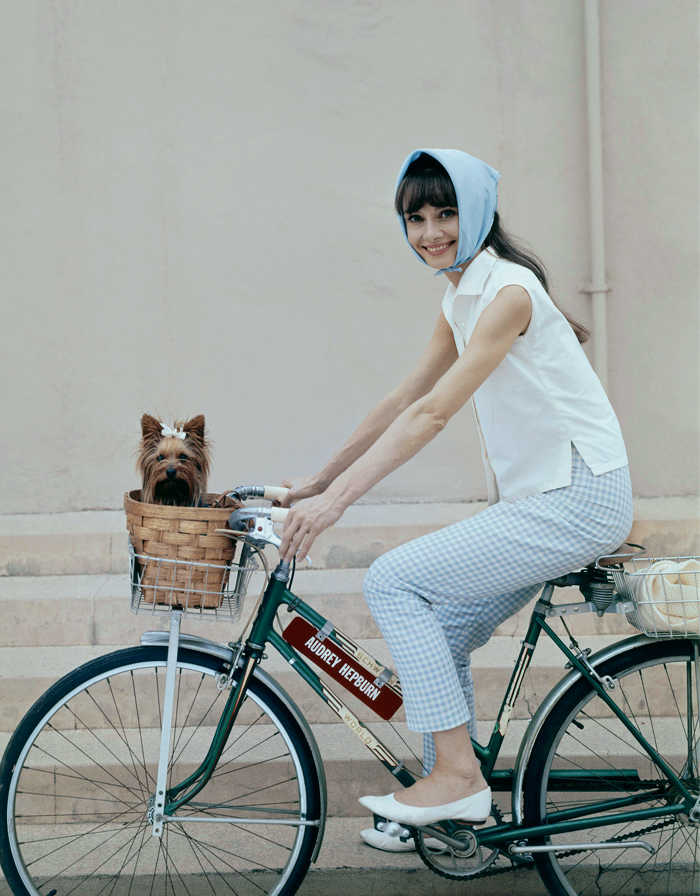
Audrey Hepburn is perhaps the most cited style icon in the history of fashion, which has the unfortunate effect of making her seem like a cliché. She is not. Look past the Halloween costumes and the endless Instagram tributes, and what you find is a woman with a genuinely original approach to dressing — one rooted not in wealth or trend but in a precise understanding of proportion, line, and restraint.
The Formula
Audrey’s style was architectural. She favoured shapes that were clean and geometric: the A-line shift, the straight column dress, the cropped trouser, the fitted turtleneck. Her clothes had structure but never stiffness. They created a silhouette that was graphic and immediately readable, even from a distance. This was, in part, a collaboration with Hubert de Givenchy — one of the most celebrated partnerships in fashion history — but the aesthetic was unmistakably Audrey’s own.
Recommended product: Lee Women’s Wrinkle Free 23″ Capri Pant
She understood that the body is a frame, and that the job of clothing is to clarify that frame rather than compete with it. Where other women of her era layered, accessorised, and embellished, Audrey subtracted. The famous black Givenchy dress from Breakfast at Tiffany’s is the perfect illustration: long, simple, sleeveless, worn with a single strand of pearls and a cigarette holder. Every element is doing one job and doing it completely.
The Colour Palette
Audrey’s palette was narrow and intentional: black, white, ivory, soft pink, and occasionally a deep navy or rich red for punctuation. She wore these colours in a way that made them feel like a personal signature rather than a default. Nothing about her palette was accidental; everything served the overall clarity of the image she presented.
What She Got Right
She never tried to look like anyone else. At a time when curves were celebrated and femininity was performed in a very particular register — think Marilyn Monroe, Sophia Loren, the full-figured ideal of the 1950s — Audrey dressed to suit herself: slender, gamine, precise. She wore flat shoes when heels were expected. She wore trousers when dresses were the norm. She trusted her own proportions and dressed for them rather than against them.
That confidence — the willingness to dress for the woman you actually are rather than the one fashion says you should be — is the deepest lesson her style offers.
The Takeaway
Study Audrey when you want to understand the power of a single silhouette worn consistently. Choose one line that works for your body and repeat it without apology. Edit ruthlessly: if a piece does not belong to your visual language, remove it, however beautiful it may be in isolation. And never underestimate the flat shoe.
Jacqueline Kennedy Onassis: The Discipline of Appropriateness
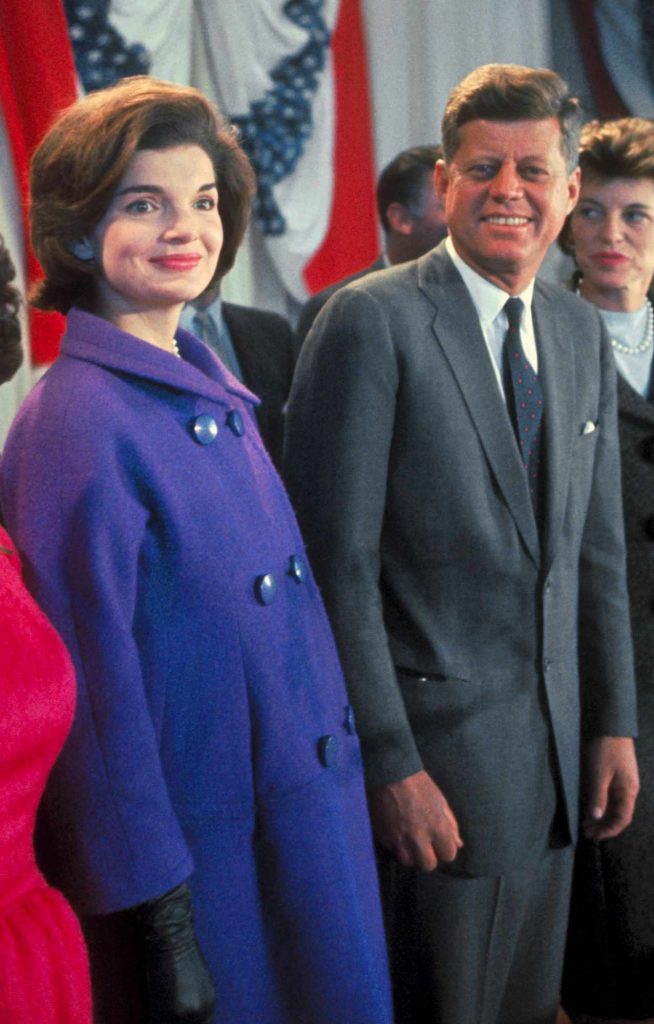
Jackie Kennedy occupies a unique position in style history because her dressing was never purely personal — it was political, diplomatic, and symbolic. As First Lady of the United States from 1961 to 1963, and as one of the most photographed women in the world for decades afterward, she understood that clothes communicate before words do. Her genius was in making that communication look completely natural.
The Formula
Jackie’s style was built on an absolute mastery of appropriateness. She dressed for the occasion, the audience, and the message — and she did so without ever appearing to calculate it. Every public appearance was considered: the shade of a pillbox hat, the length of a white glove, the weight of a fabric chosen for a climate or a ceremony. She worked closely with American designer Oleg Cassini during her White House years, and together they created a visual language for American femininity that had never quite existed before.
The silhouettes she favoured were clean and sculptural: boxy shifts, sleeveless sheaths, A-line coats with large buttons. She loved strong, clear colour — powder blue, lipstick red, brilliant white — worn in blocks with no pattern and minimal accessorising. The effect was of someone who looked entirely composed from twenty feet away, which is precisely what a First Lady needs.
Recommended product: Sexyshine Women’s Double Breasted Trench Coat A-Line
The Accessories
Where Audrey subtracted, Jackie accessorised with precision. The pillbox hat, the triple-strand pearl necklace, the oversized sunglasses of her later years — each became so associated with her that they function almost as symbols. But the key is that these pieces were always chosen to complete a look, not to create one. The accessories served the outfit; the outfit served the occasion.
Her sunglasses deserve particular mention. In her post-White House years, the large, round frames she favoured became one of the most copied accessories in fashion history — not because they were flashy, but because they projected a quality of contained, private self-possession that felt both glamorous and deeply human. They said: I am here, but I am also unreachable. That is a remarkable thing for a pair of glasses to communicate.
The Later Years
It is worth noting that Jackie’s style in her later years — working as a book editor in New York, photographed walking through Central Park in her jeans and knotted scarves — was, if anything, more instructive than her White House wardrobe. She wore wide-leg trousers and simple blouses, her hair natural and unstyled, her jewellery minimal. She looked magnificent. It was proof that her elegance had never been about the clothes themselves but about the relationship between the clothes and the woman wearing them.
What She Got Right
Jackie understood that dressing well is, at its core, an act of respect: for the occasion, for the people around you, and for yourself. She never overdressed or underdressed. She never wore something for its own sake. Every choice was intentional, and that intentionality — invisible to the casual eye — is what gave her style its particular authority.
The Takeaway
Study Jackie when you want to understand the discipline of dressing for context. Before you dress, ask: where am I going, who will be there, and what do I want to communicate? Then dress to answer those questions, as clearly and simply as possible. Master colour blocking. Invest in one extraordinary accessory per look, and let everything else recede.
Carolyn Bessette-Kennedy: The Radical Power of Restraint
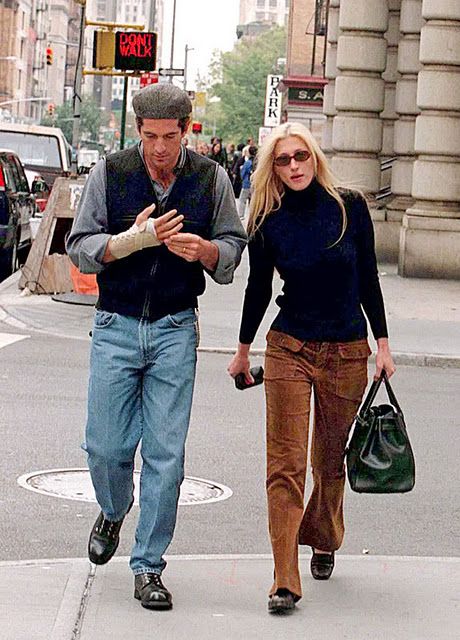
Of the three women here, Carolyn Bessette-Kennedy is the one whose style was arguably the most ahead of its time — and the one who remains most influential today. She died in 1999, at the age of thirty-three, but the images of her that survive feel more contemporary than photographs from last season. She was, in the truest sense, modern.
The Formula
Carolyn’s aesthetic was built on a principle that sounds simple but is extraordinarily difficult to execute: the complete elimination of everything unnecessary. She wore almost exclusively neutral colours — white, ivory, cream, grey, black, and the occasional deep navy. She avoided pattern entirely. She wore almost no visible jewellery. Her hair was almost always pulled back or left to fall simply. She chose clothes that were exquisitely cut but made no particular statement; the point was never the garment but the total effect.
She had an almost academic interest in negative space — in what was not there. Where other women of the 1990s were dressing in the louder, more maximalist idiom of that decade, Carolyn moved in the opposite direction. Her clothes were quieter than quiet. They were, in the most literal sense, the absence of noise.
The Silhouettes
The pieces she returned to again and again were telling: the bias-cut slip dress, the column gown with no embellishment, the oversized men’s shirt worn tucked loosely into wide trousers, the flat shoe or minimal heel. She was a devotee of Calvin Klein, Narciso Rodriguez (who designed her wedding gown), and a handful of other designers who shared her understanding that the greatest luxury is the confidence to appear in public in almost nothing at all — and have it read as the most sophisticated choice in the room.
Her wedding dress remains one of the most studied garments in recent fashion history: a bias-cut crepe gown in pearl white, with no lace, no beading, no train, no veil, no ornamentation of any kind. It was radical. It looked like it had always existed.
The Attitude
What separated Carolyn from women who simply wore minimal clothing was attitude. She wore restraint with complete conviction. There was nothing apologetic or uncertain about her choices; she wore a grey slip dress to a black-tie event and it did not read as underdressed because she carried it as though it were the only possible choice. That conviction — the internal certainty that what you are wearing is exactly right — is the invisible ingredient that separates elegant from merely bare.
She also had an extraordinary relationship with fit. Her clothes were never tight, but they were always precise. They skimmed the body in a way that suggested the body without revealing it. The line between a perfect fit and a poor one is often a matter of millimetres, and Carolyn understood this in a way that very few women, before or since, have so consistently demonstrated.
What She Got Right
Carolyn understood that restraint is not deprivation — it is a form of confidence. She did not wear less because she had nothing to say; she wore less because she was saying something that did not require volume. Her style was a study in signal-to-noise ratio: by removing everything extraneous, she made everything that remained more powerful.
She also demonstrated, perhaps more clearly than anyone, that the relationship between a woman and her clothes matters more than the clothes themselves. A perfectly cut slip dress on someone who is uncertain about it looks like a slip. On Carolyn Bessette-Kennedy, it looked like a statement about the nature of beauty.
The Takeaway
Study Carolyn when you feel the pull to add more. When you have dressed and are considering a necklace, a belt, a different shoe — look once more at what you already have, and ask whether it needs anything at all. Practice the discipline of the final removal: before you leave the house, take one thing off. Not as a rule, but as a habit of questioning. And invest in perfect fit above everything else.
Three Women, One Principle
Audrey, Jackie, and Carolyn dressed differently. Their worlds were different, their silhouettes were different, their relationships to fashion were different. Audrey worked with couture; Jackie used clothes as political communication; Carolyn wore minimalism with the certainty of a manifesto.
But look closely, and the same principle runs through all three approaches: they each knew who they were, and they dressed from that knowledge rather than toward it. They were not searching for themselves through clothes. They had already arrived.
That is the deepest lesson of timeless elegance. It is not about the right skirt length or the correct shade of neutral. It is about the clarity that comes from self-knowledge — from understanding your proportions, your life, your values, and your relationship to the world you move through. When that understanding is present, even a simple white shirt becomes something worth looking at.
The women who dress with the most enduring elegance are not the ones who follow the best advice. They are the ones who have stopped needing it.